Weather notes
Sand-free beach and picnic blankets
A good outdoor blanket keeps the ground where it belongs: sand under it, not on it, and dew out of your clothes.

Size
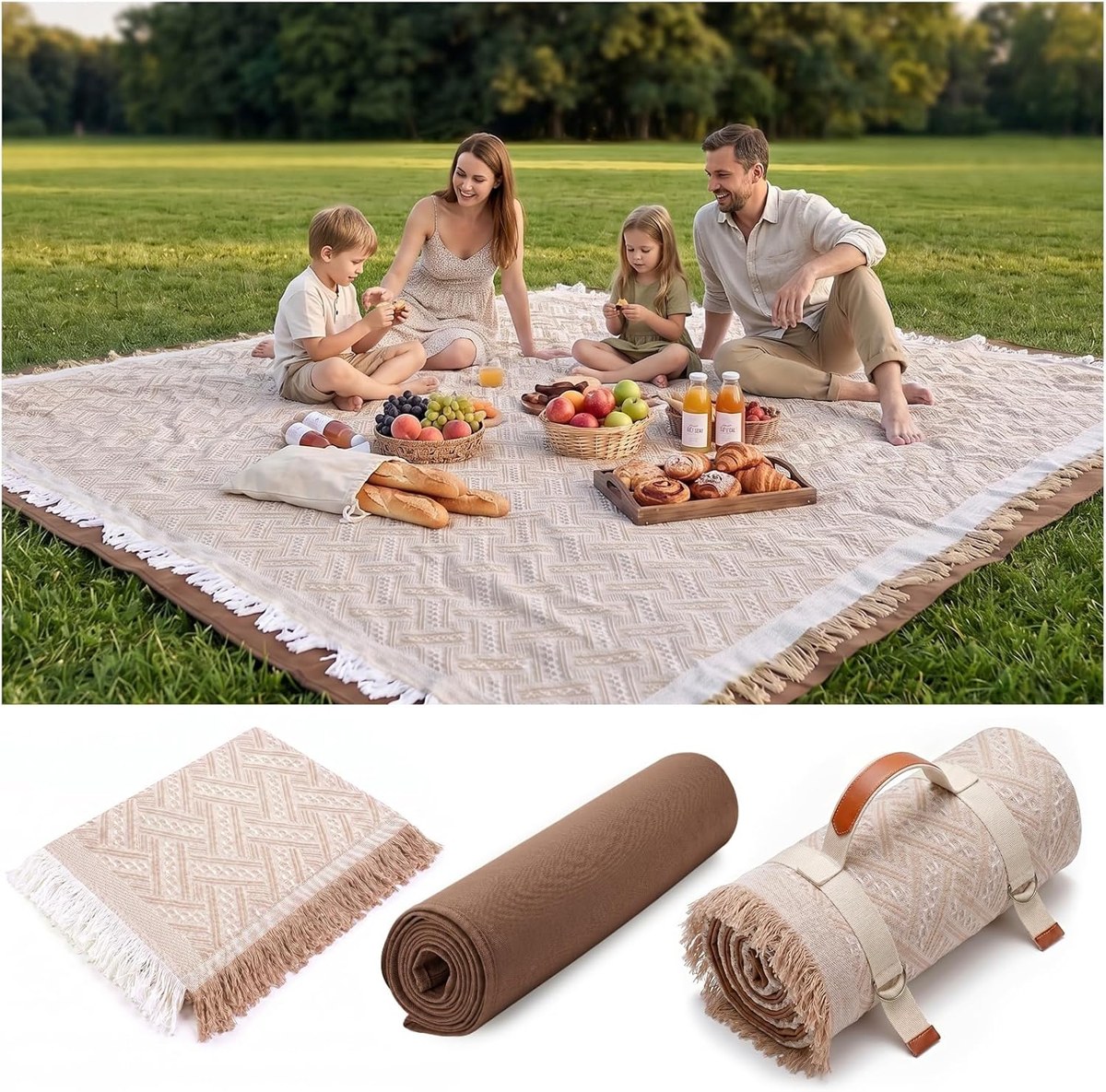
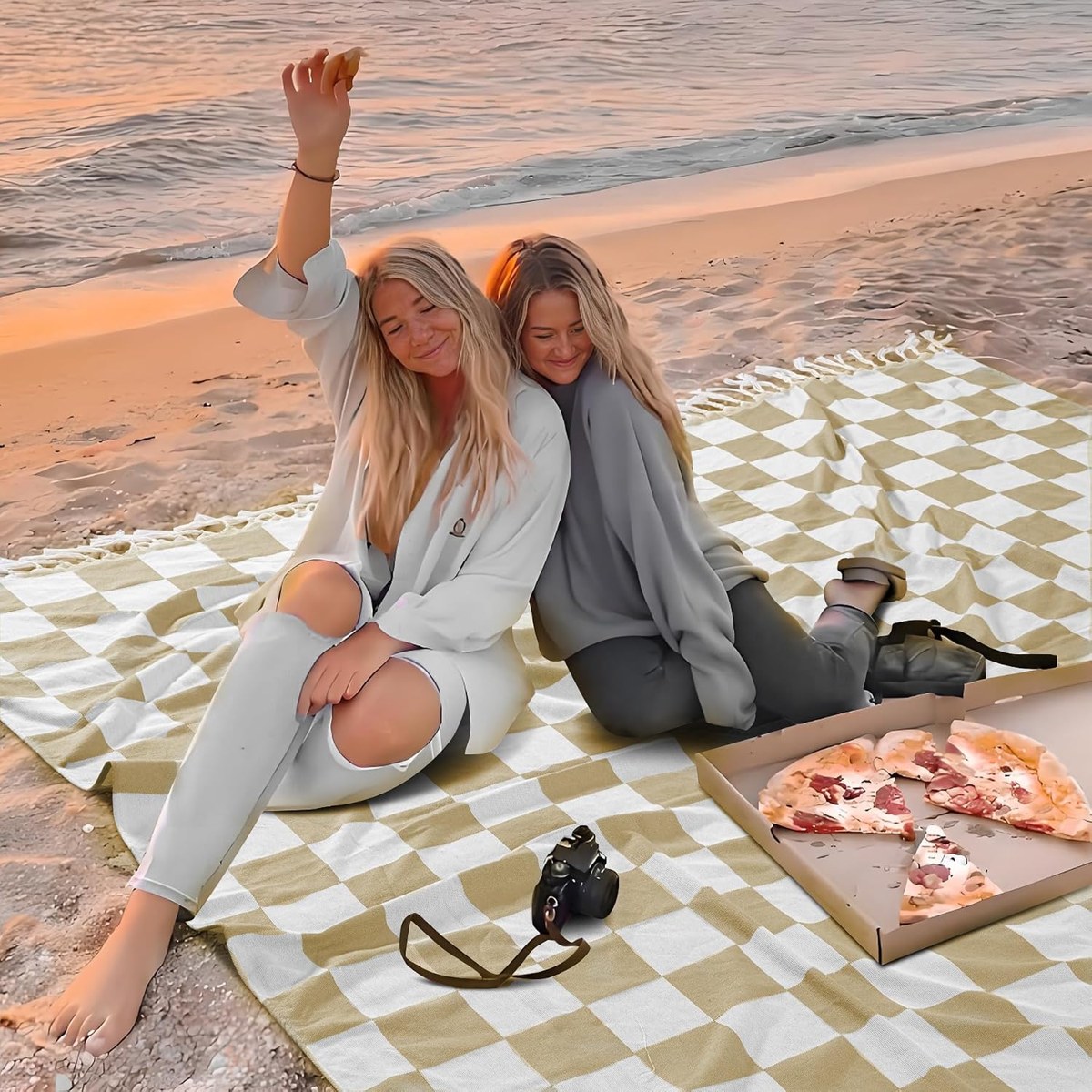
Count people, then add room. An 80 by 80 inch picnic blanket seats four to eight adults or lets four lie down; an 82 by 88 inch Turkish towel blanket comfortably fits two; a single beach towel is enough for one. A blanket that is too small means elbows in the sand, while one that is too large is heavy to carry and hard to keep flat in the wind, so pick the size for your usual group.
Beach blanket, beach mat or beach towel?
A beach towel is for drying off and lying on; it is light and packable but thin. A beach blanket or picnic blanket is a larger, layered ground cover with a waterproof base, made for a group and for damp ground. Sand-free beach mats are a third type, often with corner pockets and stakes for anchoring in wind. Genovega makes towels and blankets: the 80 by 80 inch waterproof blanket, the 2-in-1 boho blanket with a woven towel layer, and giant Turkish towel blankets.
What sand free really means
No beach blanket repels wet sand. What a good sand-free blanket does is give dry sand nothing to hold on to: a smooth, tight top layer instead of loops or fluff. Lift one edge, shake once, and the sand slides off. Let the blanket dry in the sun for a few minutes before you pack up and it comes home almost clean.
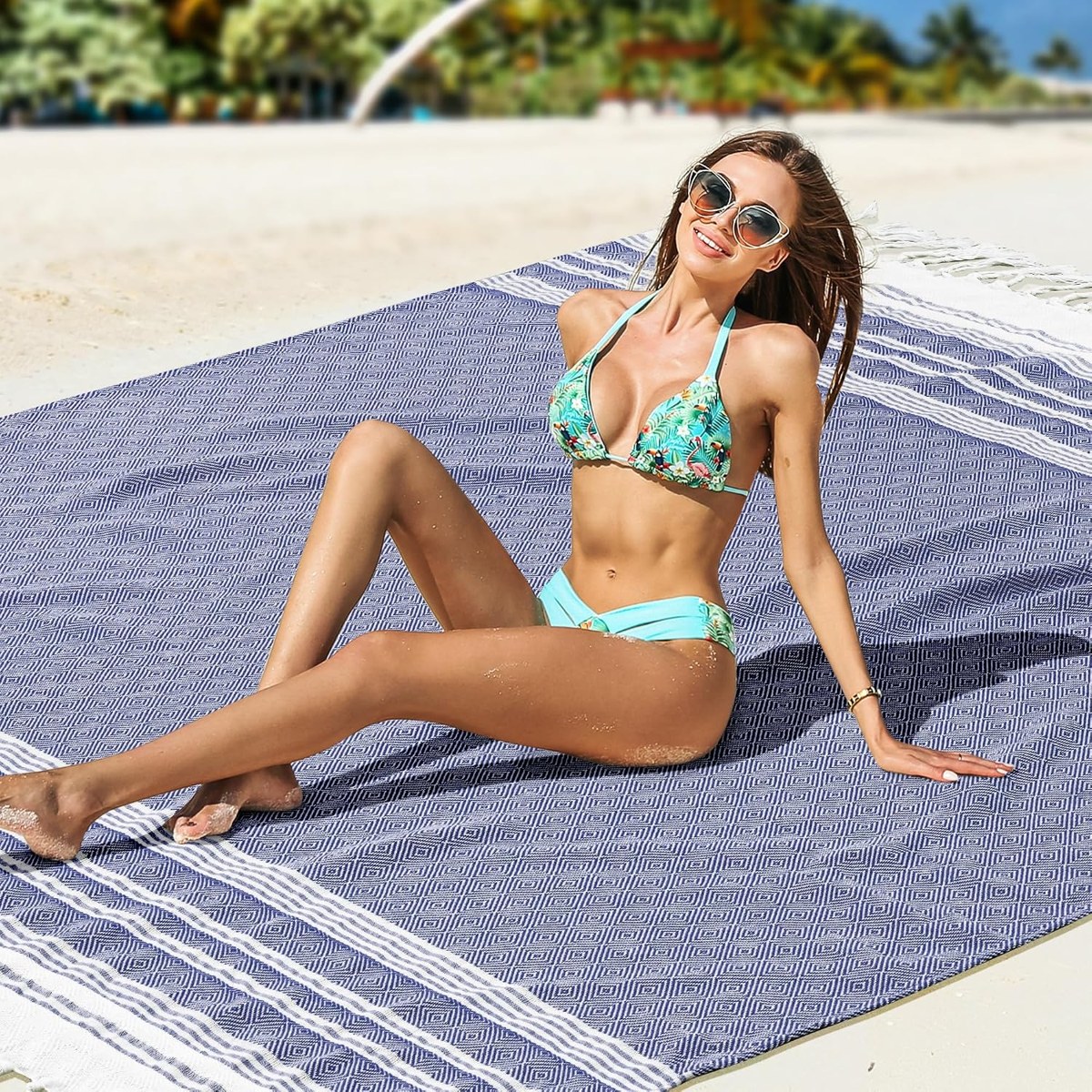
Turkish towel blankets shed sand the same way thanks to their flat weave; they are the lightest option when the sand is dry.
Wind, corners and shade
Lay the blanket with the wind at your back and weigh each corner with a bag, a cooler or shoes before anyone sits down. A beach umbrella or a canopy works best set up next to the blanket; that way the shade moves with the sun while the blanket stays put. On very windy days, the heavier waterproof square stays down better than a light towel.
Comfort on the ground
A padded middle layer makes the difference between sitting on a blanket and sitting on the ground: roots, pebbles and shells are softened, and cold from damp grass does not come through. For long days, bring a folded towel as a pillow; the blanket handles the rest.
Materials, design and durability
Look at each side of the blanket separately. The top should be soft fabric that feels nice against bare legs, smooth enough to shed sand; the bottom should be a durable waterproof material rather than thin plastic film that cracks after a season. A quality outdoor blanket uses three layers: a soft top, a padded middle for comfort and a water-blocking base. That design keeps sea water and dew on the outside and lasts for years of summers.
Plush blankets feel luxurious but hold sand and take hours to dry. For the beach, a smooth, lightweight fabric is the better trade; save plush throws for the sofa.
Packable for travel and camping
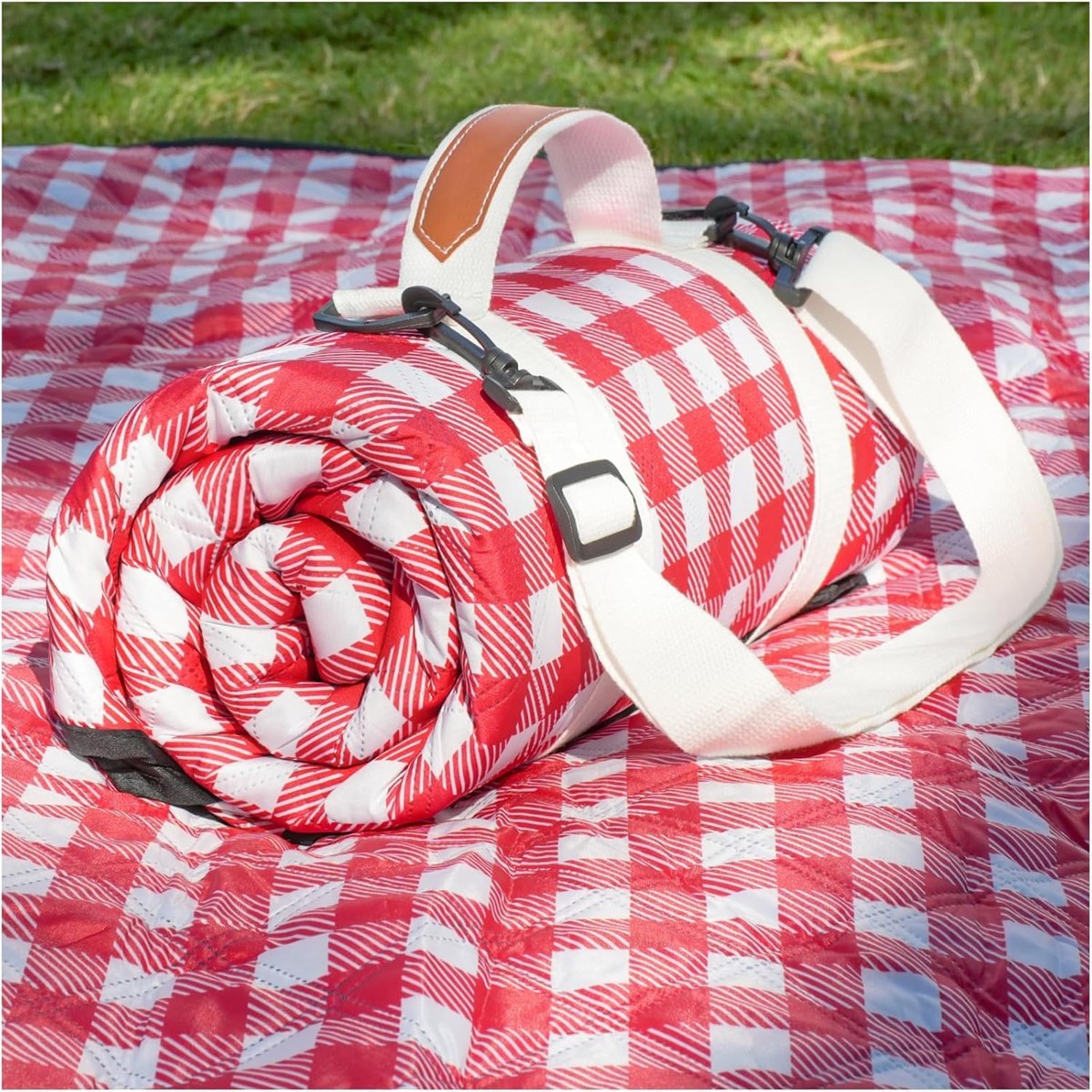
The best beach blanket is the one you actually bring. Check the folded size and the weight before you buy: a packable blanket with its own strap or bag fits in a tote next to the bath towels, the sunscreen and the snacks, leaving your hands free for the umbrella and the cooler. For camping and road trips, an oversized waterproof blanket doubles as a ground sheet under a canopy, a dry spot outside the tent or a clean area for kids and dogs.
- Fits in a car trunk without taking the space of a chair
- Carries with one hand, so no extra accessories are needed
- Folds back to the same size every time
Packing and cleaning
- Fold along the existing lines so the carry strap closes easily
- Shake out dry sand, then wipe the base with a damp cloth
- Dry completely before storing to avoid musty smells
- Keep it in the car from May to September: picnics happen on short notice