Weather notes
What are Turkish towels?
Turkish towels are flat-woven towels from a long tradition of bathhouse textiles. They are thin, light and quick to dry, and they have become a beach-bag favourite.

Flat weave versus terry
A terry towel is covered in small loops that hold water and sand. A Turkish towel is woven flat, so it is thinner, lighter and dries far faster. It absorbs well once wet and grows softer with every wash.
Pros and cons
- Pros: light to carry, small when folded, quick to dry, sheds sand, doubles as a sarong, shawl or throw
- Cons: feels thinner than a bath towel, less warming on a windy day
For beach days, travel and small bathrooms, the pros usually win.
Peshtemal and fouta
In Turkey the traditional flat-woven bath cloth is the peshtemal; in North Africa and France a close cousin is the fouta. Both were made for hammams, where a light cotton cloth had to wrap around the body, dry fast in hot rooms and be washed every day. The same material and design make a great beach towel: soft, absorbent, quick to dry and small in a beach bag.
Cotton, blends and texture
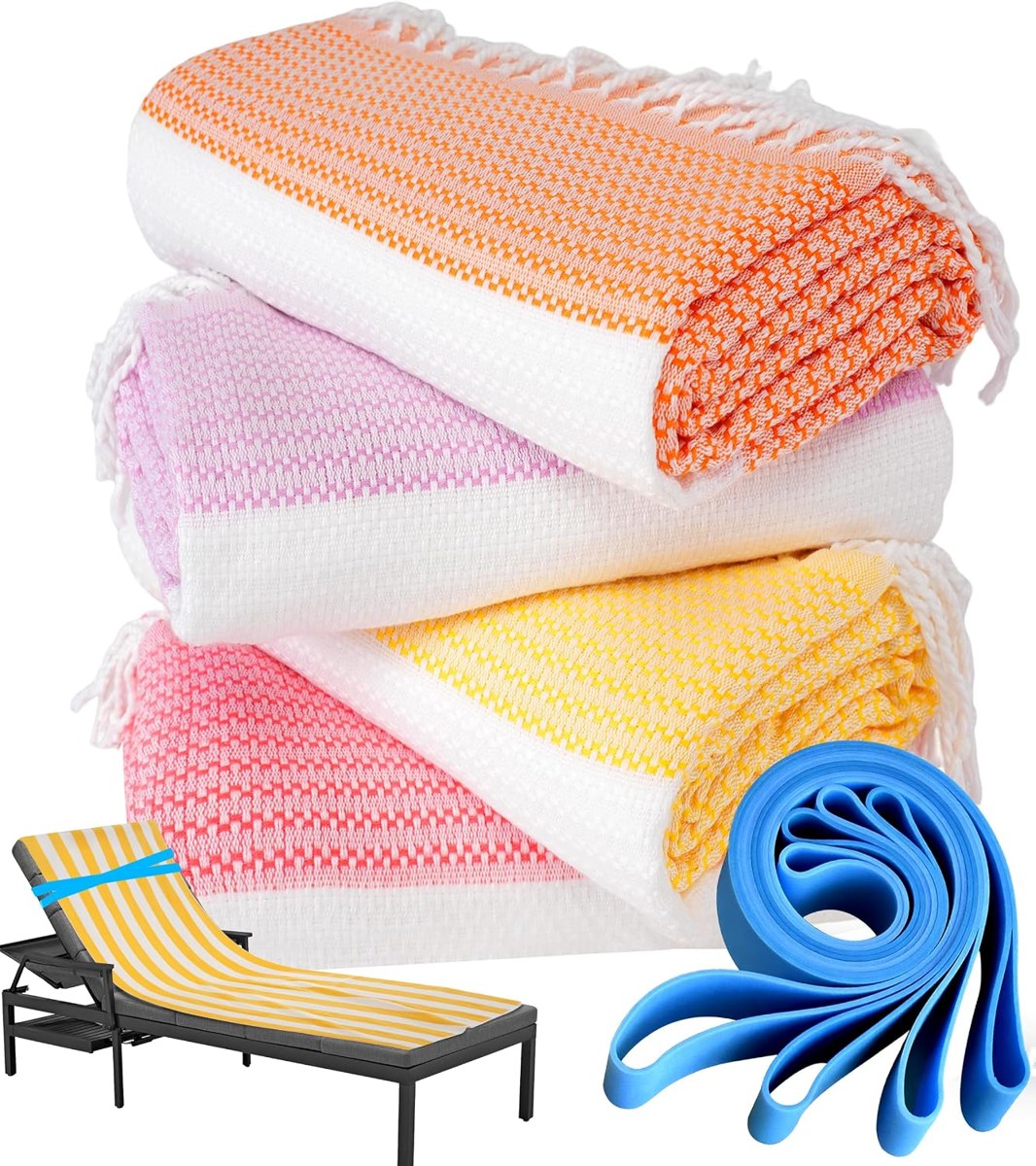
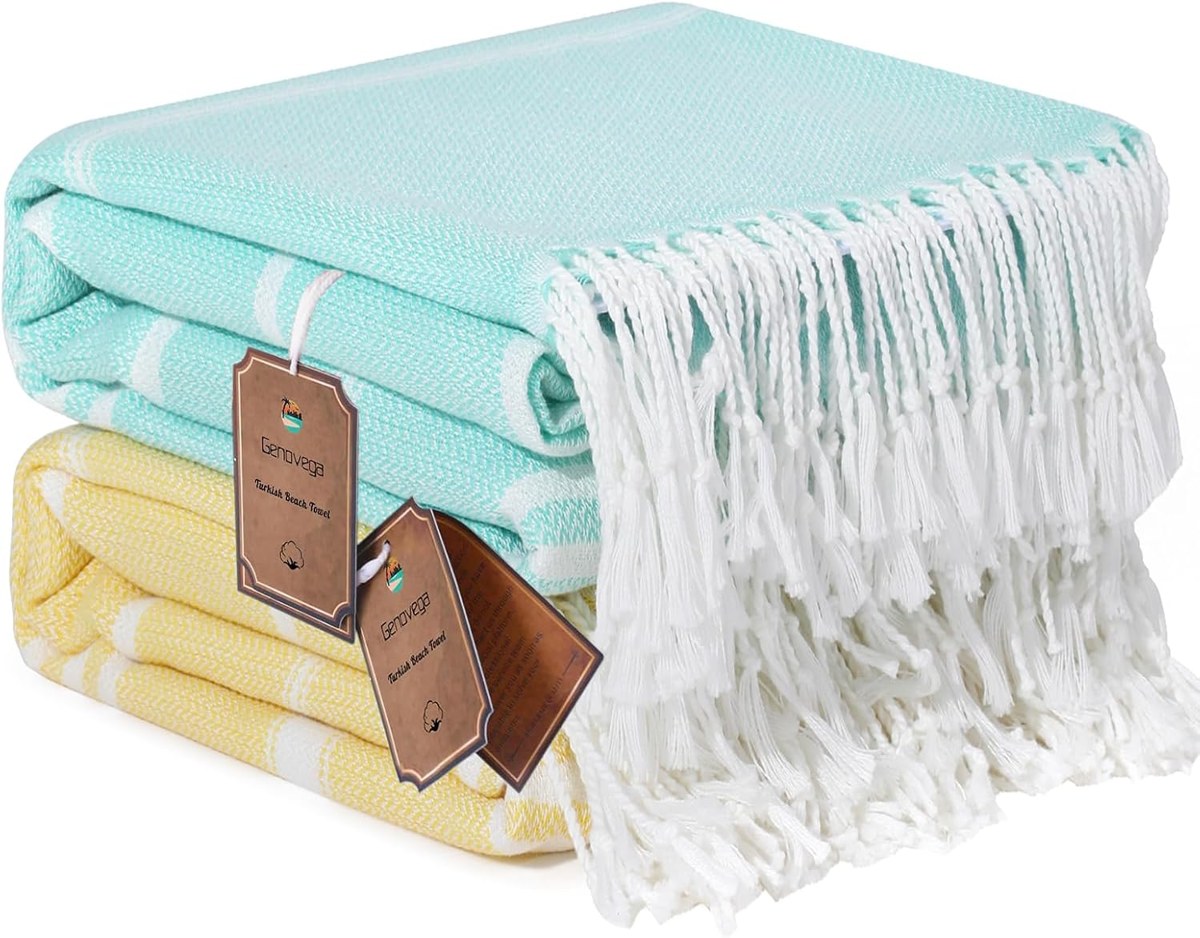
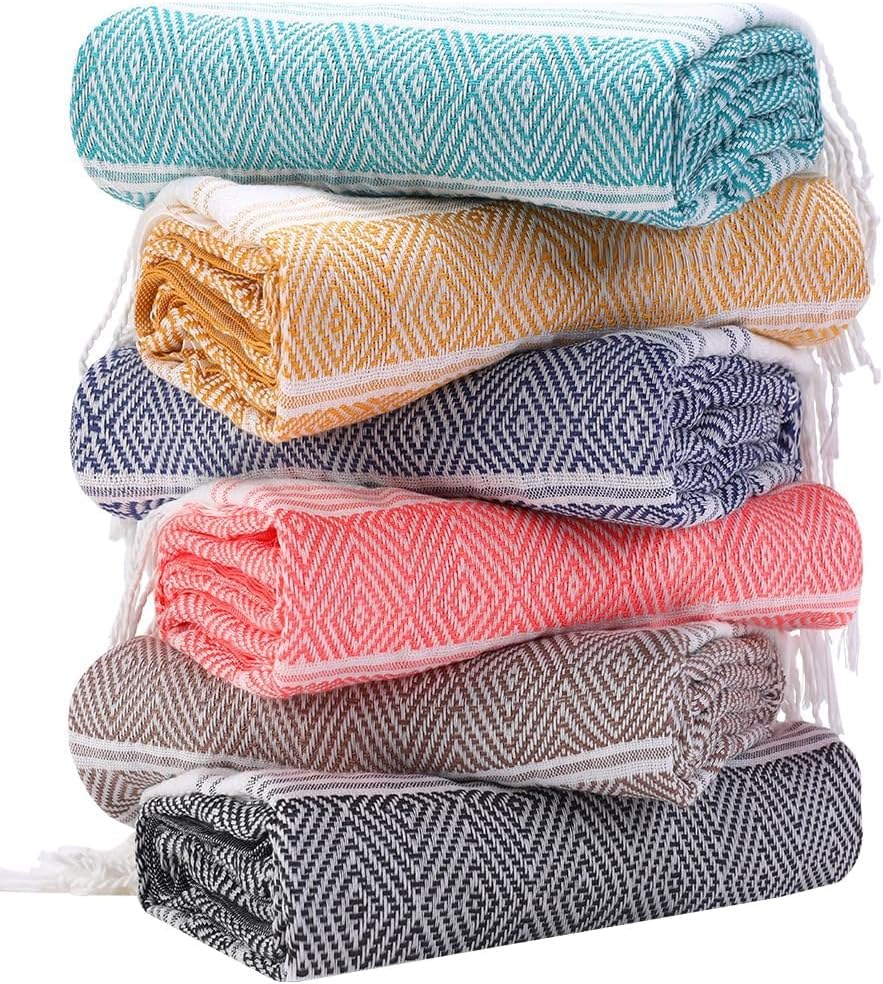
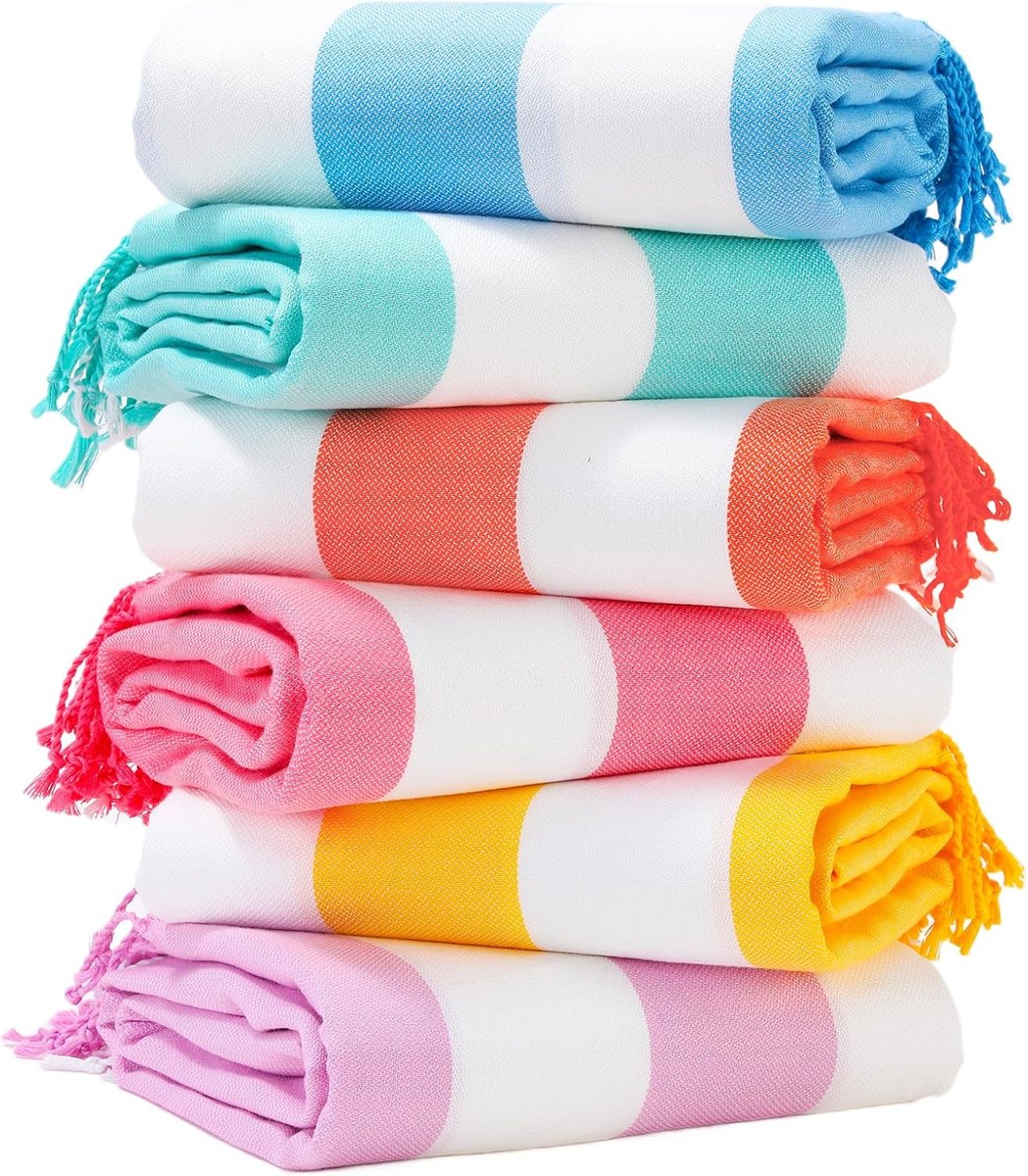
Pure cotton Turkish towels have the most natural texture and get softer with every wash. Cotton-polyester blends dry a little faster, hold bright colors well and resist wrinkles in a suitcase. Genovega Turkish beach towels come in both: cotton printed towels at 72 by 36 inches and cotton-polyester striped and solid sets at 74 by 38 inches.
More than a beach towel
- A pool and lake towel that dries between swims
- A bath towel for small bathrooms and guest rooms
- A sarong or shawl for the walk back from the beach
- A light blanket on a cool summer evening
- A picnic mat or yoga mat on dry ground
That versatility is why one striped set can replace a whole stack of thick towels.
Care
Wash two or three times before the first use to open up the fibres. Use mild detergent, skip fabric softener, and line dry or tumble on low. Shake sand off when the towel is dry, not wet.